
You probably already know that your mobile phone contains metals. But do you know where the metal comes from? In modern life, we rely on metals and minerals, yet we have lost touch with where they come from and what it actually means to extract them.
Sweden's and Europe's self-sufficiency in raw materials such as metals and minerals is a hot topic. In a shaky geopolitical environment, we are facing a massive green transition. Fossil energy will be replaced by renewable energy, electrification will accelerate and sustainable infrastructure will be built.
To do this, we need large quantities of metals. Lithium, cobalt, neodymium and graphite - all critical for batteries and electric cars - have never before been mined in Sweden to meet the kind of demand we may now see. Instead, they are imported from countries where environmental laws and working conditions are significantly worse than in Europe.
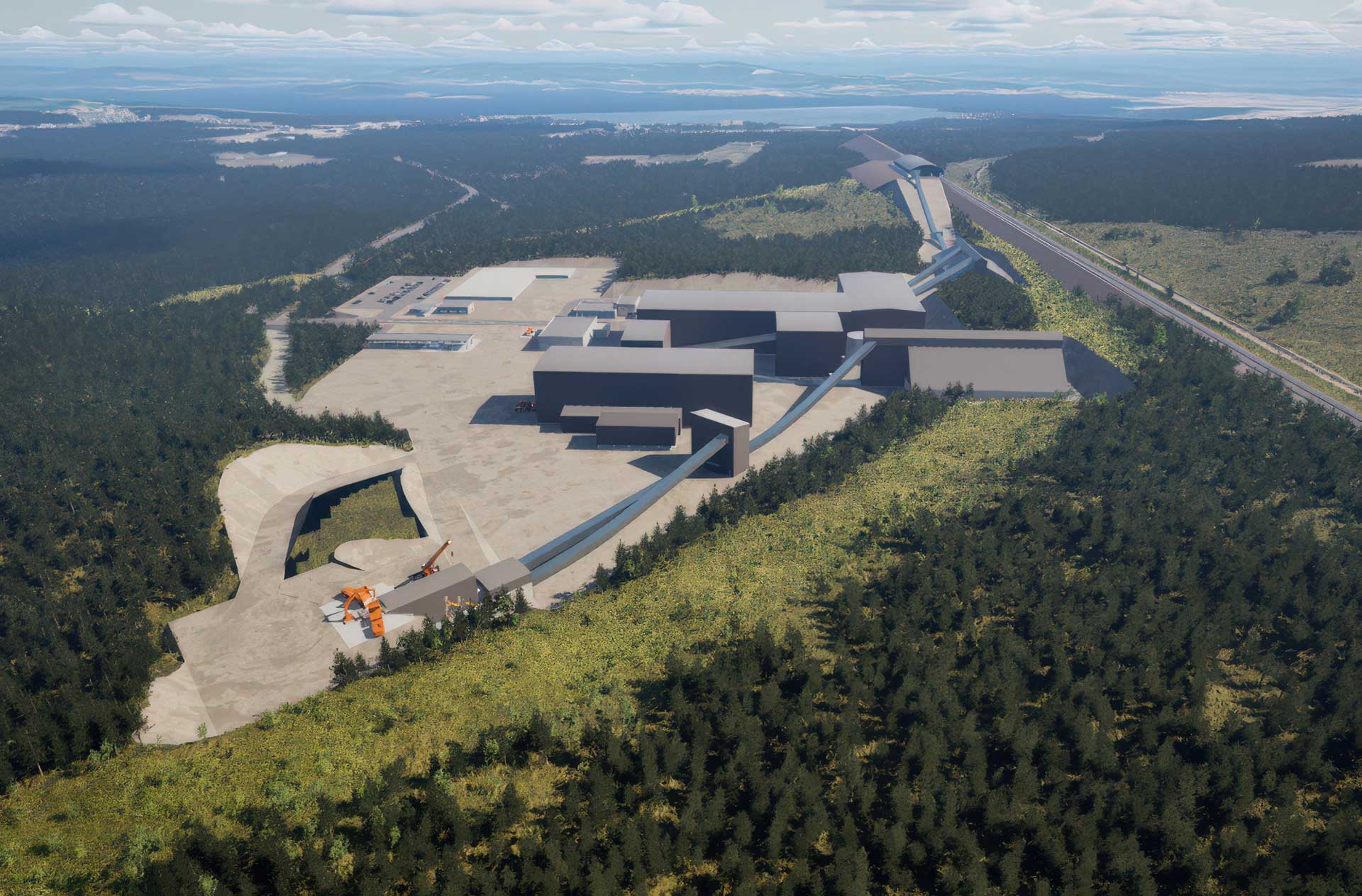
But starting new mines in Sweden is a challenge. Many are concerned about land encroachment, noise, dust and the impact on nature and water.
Recently, Novus surveyed the public's attitude towards the Swedish mining industry. According to the survey, 64% of Swedes believe that the mining industry should be developed to secure the supply of important metals, 74% think that the mining industry is important for the Swedish economy and 67% see it as a source of more jobs. At the same time, 72% believe that there is a conflict between the mining industry and environmental issues.
Instead of dismissing these fears, we need to listen and understand where the concerns come from. Trust is not built by simply meeting minimum requirements, but by going further. Skepticism about new mines is not only about conflicts of interest or environmental concerns, but also about consumption: what do we really need, and how can we reduce our dependence on virgin raw materials?
The main challenges are the increasing demand for raw materials for the energy transition, the need to develop new technologies and to ensure a well-trained workforce.
At the same time, we need to be better at valuing our resources. How much energy, power and resources went into mining the raw material for your bike, tool or toy? We care that the food we eat is locally sourced, but when was the last time you asked where your metals come from and how they were mined? To meet these challenges, the industry needs to get better at interdisciplinary research and at raising awareness about the crucial role of mining in society.
I believe, among other things, that we need to get better at recycling metals, use AI to make mining more efficient, find new mining techniques that reduce energy consumption and develop fossil-free mining vehicles.
There is a huge need to attract future innovators and engineers to the industry - but how do we get our young people to make the connection that what we dig out of the ground is actually relevant to them, in their everyday lives?
Ten years ago, I carried out a project with secondary school students in Kumla, Ljusnarsberg and Skinnskatteberg. It was about finding solutions to local environmental problems, in different ways related to mining. Students collected materials, designed their experiments and worked on the task during weekly chemistry lessons. The experiments were part of a real research project, and the students' results were later included in a PhD thesis and presented at international scientific conferences.
Evaluation of the project showed that before the project, many students perceived chemistry as difficult and abstract, with no connection to reality. Working on real problems changed their attitude and made them more engaged. Students also became more motivated when they realized that their work was 'real' and that the results could contribute to solutions to environmental problems.
By following the entire research process - from field sampling to laboratory analysis and report writing - students gained practical experience of how research works.
The fact that the projects dealt with environmental problems in the pupils' immediate environment made the issues more relevant and concrete for them. Several pupils stated that they had become more interested in science and that they could imagine a future in research or chemistry.
I believe this can be a way to strengthen interest in science and technology and promote a scientific approach to inspire a new generation of engineers and scientists.
We have a chance to shape a more sustainable future, but it requires us to start seeing our georesources for what they are - vital building blocks for a greener world. And to do that, we need to start with knowledge, commitment and a willingness to invest in future generations.
It's time to value what's under our feet - and at the same time inspire the next generation to be part of technological and sustainable innovation. A good question to start with is: Where do my metals actually come from and what would my everyday life look like without them?